Wednesday, December 3, 2008

The Gospel of Luke (Extra Credit)

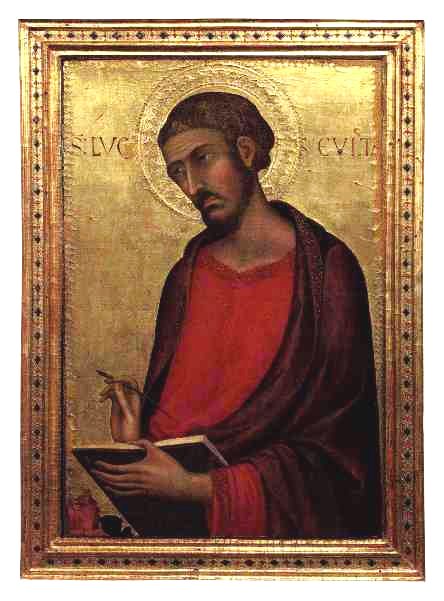
Many Romans of the imperial period followed Virgil, Ovid, and Horace in hoping for a political leader who would solve Rome's problems. At the same time, many other Romans were looking to an entirely different hope. The Gospel of Luke is particularly good at describing that hope. Please read through a chapter or two of Luke's gospel, and pick out a verse that might have had particular appeal to those living under the rule of Imperial Rome.

Many different Bible translations are available at the Blue Letter Bible site.

Herodian of Antioch (Extra Credit)

Herodian of Antioch's History of the Roman Empire is an important source for the AD 180-238 period. Choose one of the emperors from this period (possibilities include Commodus, Pertinax, Didius Julianus, Septimius Severus, Macrinus, Bassianus, and Alexander Severus) and note what Herodian has to say about that emperor. Cite here an example of that emperor's competence (or lack thereof) and an example of the difficulties that emperor faced, looking especially for problems that emperor had with the Roman army.

If you prefer, you might comment on one of the important women leaders, e.g., Julia Maesa or Julia Mamea. You might also like looking at what Herodian has to say about Xenobia, the queen of Palmyra.

You may find the site linked here a bit difficult to navigate. Persevere! Use the "page" button at the top to navigate through the eight *books* of this history looking at the book heading to see which emperors are included in that book. Once you find the right book, click through each of the chapter links to find the material on the emperor you want to talk about.
Marcus Aurelius' Meditations (Extra Credit)

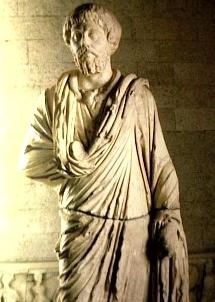
Plato said that, in an ideal society, the philosophers would be the kings, or the kings would be philosophers. Marcus Aurelius in some ways would seem to be exactly the kind of "philosopher emperor" Plato would have wanted. Please read the opening sections of Marcus Aurelius' Meditations. Choose a line that particularly well shows one of the things Aurelius particularly values, and note whether this value would make him a good emperor or not.

Thursday, November 20, 2008

Twelve Caesars (Extra Credit)

Suetonius' Lives of the Caesars is one of the most important sources for the period following Nero's Death. Among his "Twelve Caesars" are Galba, Otho, Vitellius, Vespasian, Titus, and Domitian Suetonius includes all sorts of fascinating biographical details about the men he describes--along with plenty of sometimes unverifiable gossip and rumor.

For extra credit, please read Suetonius account of any one of the casesars of this period (links above) . Pick an incident from the life of this caesar that shows a way in which Augustus' system (the principate) can work well, or an incident that shows that system created by Augustus was not working out particularly well.

If you have fallen behind on your blogs, you can add to your extra credit by doing an extra blog entry on a *different* ceasar than you talk about in your first post.

Wednesday, November 19, 2008

Selections from Tacitus (Extra Credit)

Most of the historical works written by the Romans disappeared long ago. But while other books were lost, Tacitus' works were often copied, studied and preserved. Can you guess why this might be so? Please read the first few paragraphs of Tacitus' Histories, and see if you can find a line or two that explains the appeal of Tacitus and his approach to history.

Thursday, November 6, 2008

Ovid

Most of the Greek and Roman myths you read in high school were retellings of stories from Ovid's Metamorphoses. Choose your favorite myth and read Ovid's version of that myth. Read also one of the Ovid myths that you *hadn't* read before. Cite one example for each myth that shows particularly well Ovid's "insight into the human condition."

If you want to get the overall picture of the Metamorphoses, see this excellent introduction and commentary by Larry Brown.

Tuesday, November 4, 2008

Virgil

Please read Book I and Book II of Virgil's Aeneid. Skimming through Book I is sufficient. Please read Book II with a bit more care. Cite a line or two that particularly well show Virgil's "insight into the human condition," i.e., that shows his understanding of subjects like fate, the relationships between men and women, relationships between men and gods, the impact of war, etc.